Is Sourdough Bread Better for You?
Is Sourdough Bread Better for You? What the Science Actually Says
The Short Answer
Real sourdough bread made with a live starter and long fermentation is genuinely different from standard bread. The fermentation process breaks down some of the compounds that make regular bread harder to digest, produces organic acids that slow sugar absorption, and improves the availability of certain minerals. Research is still developing in this area and results vary depending on the flour, the starter and the fermentation time. But the honest answer is yes, real sourdough is generally considered easier on the body than commercially produced bread, and the research backs this up with increasing confidence.
In This Sourdough Health Guide
Sourdough has had a remarkable comeback. From being the everyday bread of our grandparents to a supermarket trend to a genuine home baking movement, it is now one of the most talked about foods in the context of gut health and nutrition. But with so much noise around it, it is worth stepping back and asking an honest question: is sourdough actually better for you, or is it just good marketing?
The answer, as with most things in nutrition, sits somewhere in the middle. There are real and meaningful differences between bread made with a live sourdough starter and bread made with commercial yeast, and those differences do matter for how your body processes it. But not all sourdough is created equal, and the type of starter, the flour used and the fermentation time all play a role.
In this guide we cut through the noise and look at what the research actually says, in plain language, without overclaiming. If you are curious about getting started with your own live sourdough starter, you can browse our full range of fresh heirloom sourdough starters.
How Sourdough Bread is Made and Why it Matters
To understand why sourdough might be better for you, you first need to understand how it is made and how that differs from standard bread.
Regular bread is made using commercial baker’s yeast, a single strain of yeast that produces carbon dioxide quickly to make the dough rise. The whole process from mixing to baking can be done in a couple of hours. Fast, efficient and consistent.
Real sourdough bread is made using a sourdough starter, a living culture of wild yeast and lactic acid bacteria that has been maintained through regular feeding. The dough ferments slowly over many hours, sometimes overnight or longer. During this extended fermentation, the microorganisms in the starter do something important: they begin to break down and transform the flour in ways that fast commercial yeast simply does not have time to do.
⏲ The key difference is time. Real sourdough ferments slowly for 8-24 hours or more. That extended fermentation is what changes the nutritional profile of the bread, not just the flavour.
This is why fermentation time matters so much when evaluating sourdough research. A loaf fermented for 2 hours is fundamentally different from one fermented for 16 hours, even if both are technically called sourdough. Our sourdough bread recipe and starter activation guide cover how to get the most from your fermentation time at home.
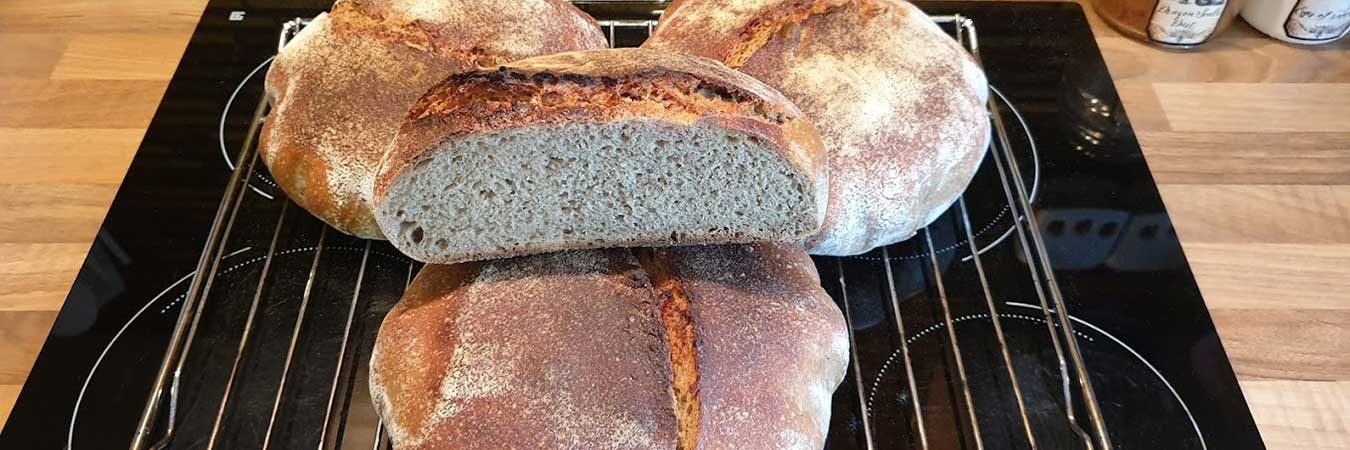
The open crumb of a real sourdough loaf, the result of long fermentation with a live starter and nothing else.
Sourdough vs Regular Bread: A Direct Comparison
Here is how real sourdough made with a live starter and adequate fermentation time compares to standard commercially produced white bread and wholemeal bread across the factors that matter most.
| Factor | Real Sourdough | Standard White Bread | Standard Wholemeal |
|---|---|---|---|
| Glycaemic index | Lower, around 54 | High, around 71 | Medium, around 68 |
| Digestibility | Generally easier, starches partly broken down | Standard | Can be harder for some people |
| Gluten structure | Partially broken down by fermentation | Intact | Intact |
| Phytic acid | Reduced by fermentation, better mineral absorption | Higher levels | Higher levels |
| Fermentation time | 8-24 hours or more | 1-2 hours | 1-2 hours |
| Natural shelf life | Longer, organic acids act as natural preservatives | Shorter without additives | Shorter without additives |
| Additives needed | None in a real homemade loaf | Often contains preservatives, emulsifiers | Often contains preservatives, emulsifiers |
| Flavour complexity | Deep, tangy, complex | Mild, neutral | Nutty, earthy |
What Actually Makes Sourdough Different Nutritionally
Four things happen during sourdough fermentation that do not happen in fast commercial bread making. Each one has a meaningful effect on the finished loaf and how your body handles it.
Easier Digestion
The lactic acid bacteria in a sourdough starter begin breaking down complex starches and gluten proteins during fermentation. This pre digestion means your gut has less work to do when you eat the bread. Many people who find regular bread sits heavily report that real sourdough feels lighter and easier on the stomach.
Lower Glycaemic Response
The organic acids produced during fermentation, primarily lactic and acetic acid, slow down the rate at which starch is broken down into glucose in the digestive tract. This means the sugar from sourdough bread enters the bloodstream more gradually compared to standard bread, resulting in a lower glycaemic response overall.
Better Mineral Absorption
Whole grains contain a compound called phytic acid that binds to minerals like iron, zinc and magnesium and makes them harder for the body to absorb. During sourdough fermentation, the bacteria produce enzymes that break down phytic acid significantly, freeing up those minerals and making them more available to your body than they would be in unfermented bread.
Natural Preservation
The acetic acid and other organic acids produced during fermentation act as natural preservatives, giving real sourdough a longer shelf life than commercial bread without the need for artificial additives or preservatives. A homemade sourdough loaf baked on Monday will still be good on Thursday, often without any artificial help.
What the Research Actually Says
The research on sourdough and health is genuinely interesting, though it is worth being honest about what it does and does not yet confirm.
A systematic review of 25 clinical trials published on PubMed looked specifically at sourdough bread and its effects on glucose response, gastrointestinal comfort and appetite. The review found that in studies using specific strains and fermentation conditions, significant improvements were observed in glycaemic response, satiety and gastrointestinal comfort after eating sourdough compared to yeast bread. The authors noted however that fermentation parameters, flour type and microbial composition all influence the outcome, meaning not all sourdough performs equally in research settings.
A 2023 review published in Frontiers in Nutrition took a broader look at the clinical evidence for sourdough health claims. The authors found strong mechanistic and laboratory evidence supporting the benefits of sourdough fermentation but noted that translating these into consistent human health outcomes is more complex in real world settings. Their conclusion was that sourdough has significant potential as a functional food, but that more standardised research is needed before firm clinical conclusions can be drawn.
An honest note: Sourdough bread is a food, not a treatment or supplement. The research is encouraging and the differences from commercial bread are real, but the effects vary significantly depending on the starter used, the flour, the fermentation time and the individual. If you have specific dietary concerns or health conditions, speak with a registered dietitian or your GP before making significant changes to your diet.
Is All Sourdough the Same? The Supermarket Problem
This is one of the most important things to understand about sourdough, and it is something that gets very little attention in mainstream conversation.
Most sourdough bread sold in supermarkets is not real sourdough in the traditional sense. It is often made using a rapid process that adds sourdough flavouring or a small amount of starter to commercially yeasted dough, then bakes it quickly. The long, slow fermentation that produces the nutritional differences described in this guide simply does not happen.
🔍 If the ingredients list on a supermarket sourdough loaf includes commercial yeast alongside a starter, or if the fermentation time is not mentioned, it has almost certainly not been through the long fermentation process that produces the nutritional differences. Real sourdough contains just flour, water, salt and a live starter.
This is one of the most compelling arguments for baking your own sourdough at home. When you make it yourself using a live heirloom starter and give the dough adequate time to ferment properly, you know exactly what went into it and you get the full benefit of the fermentation process. Our range of fresh sourdough starters are shipped in their active state, ready to produce a genuine long fermented loaf from your very first bake.
Who Might Find Real Sourdough Easier to Digest
Most people who switch from commercially produced bread to homemade real sourdough report that it feels noticeably easier on the stomach. This is consistent with what the research suggests about the effect of fermentation on digestibility.
People who commonly report a positive difference include those who find regular bread causes bloating or discomfort after eating, those who are sensitive to the compounds found in unfermented grains, and those who are generally trying to reduce the amount of processed food in their diet.
Important:
- Sourdough bread made with wheat flour is not gluten free and is not suitable for people with coeliac disease, regardless of fermentation time
- Those with a diagnosed wheat allergy should avoid wheat based sourdough entirely
- If you have a specific digestive condition, speak with your GP or dietitian before making dietary changes
- Our gluten free sourdough starter is available for those who need a wheat free option
Frequently Asked Questions About Sourdough and Health
Is sourdough bread good for gut health?
Real sourdough made with a live starter and long fermentation contains organic acids and partially broken down compounds that many people find easier to digest than standard bread. The research suggests it may be gentler on the digestive system for many people, though individual responses vary. Sourdough is a food, not a probiotic supplement, and the live cultures in the starter do not survive the baking process in the finished loaf.
Does sourdough bread have a lower glycaemic index than regular bread?
Yes, real sourdough generally has a lower glycaemic index than standard white or wholemeal bread. According to the International Tables of Glycaemic Index Values, sourdough bread scores around 54 compared to around 71 for standard white bread. The organic acids produced during fermentation slow down starch digestion, which results in a more gradual rise in blood sugar after eating. Results vary depending on flour type and fermentation time.
Is sourdough bread better for people with IBS?
Some people with IBS report finding sourdough easier to tolerate than regular bread. Real sourdough has lower levels of certain fermentable carbohydrates called FODMAPs compared to standard bread, which are a common trigger for IBS symptoms. However individual responses vary significantly and this is not the case for everyone. If you have IBS, speak with a dietitian before making changes to your diet based on this.
Can people with gluten sensitivity eat sourdough bread?
Fermentation does partially break down gluten proteins in sourdough, and some people with a mild sensitivity to gluten report tolerating real sourdough better than standard bread. However sourdough made with wheat flour is not gluten free and is absolutely not suitable for people with coeliac disease. Our gluten free sourdough starter is a suitable option for those who need to avoid gluten entirely.
Is homemade sourdough healthier than shop bought sourdough?
In most cases, yes. Most shop bought sourdough is made using a rapid process that does not include the long fermentation time responsible for the nutritional differences described in this guide. A homemade sourdough loaf made with a live starter and fermented for 8-24 hours will go through the full fermentation process and produce the organic acids, reduced phytic acid and partially broken down starches that make real sourdough different from standard bread.
Does sourdough bread have more nutrients than regular bread?
Real sourdough made with wholemeal or rye flour and properly fermented has better mineral bioavailability than the same flour used in standard bread, because fermentation reduces the phytic acid that would otherwise bind to minerals like iron, zinc and magnesium. This means your body can absorb more of the nutrients that are already present in the flour. Sourdough does not add new nutrients but it does make existing ones more accessible.
For questions about feeding, storing and troubleshooting your starter, visit our dedicated sourdough starter FAQ page.
Ready to Bake Real Sourdough at Home?
Start with a live heirloom starter and our step by step guides. Everything you need to bake a genuine long fermented sourdough loaf from day one.