
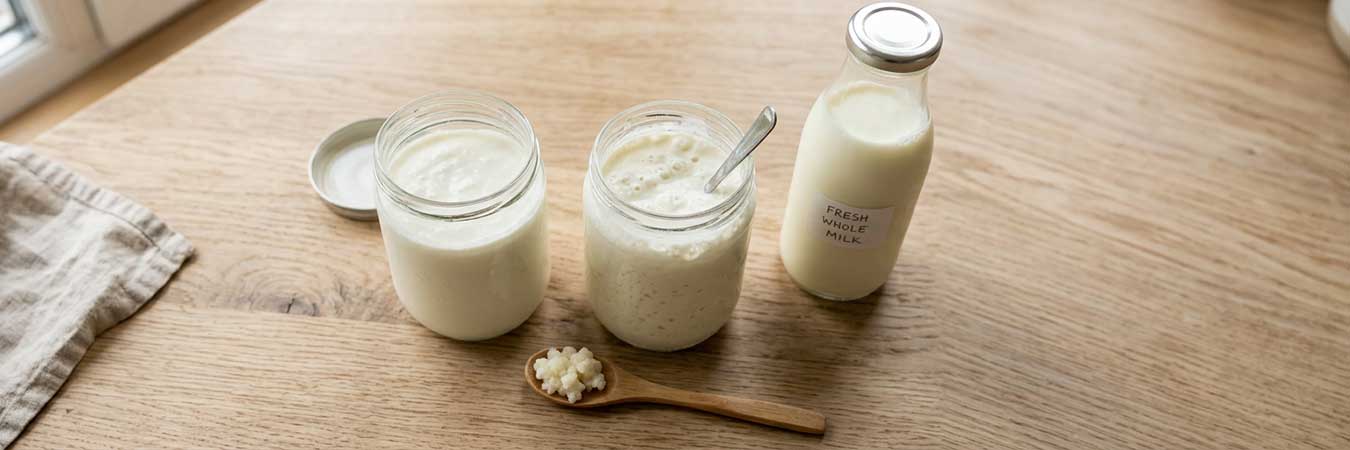
What is Kefir? Milk Kefir and Water Kefir Explained
What is Kefir?
Kefir is a fermented drink made using living cultures called kefir grains. There are two types: milk kefir, made by fermenting dairy milk, and water kefir, made by fermenting sugar water. Both produce a probiotic rich drink that many people add to their daily routine for gut health and general wellbeing. Kefir grains are not grains in the cereal sense but small living clusters of bacteria and yeast that ferment whatever liquid they are placed in.
In This Kefir Guide
If you have come across kefir recently and are not quite sure what it is, you are in the right place. Kefir has been around for thousands of years but has grown considerably in popularity over the last decade as more people look for natural ways to support their gut health through everyday food choices.
The word kefir is thought to come from the Turkish word meaning good feeling, which gives you a sense of how long people have been aware of its effects. Today, researchers around the world are actively studying kefir and its role as a fermented food, with over 28 human clinical trials completed as of 2025.
In this guide we explain exactly what kefir is, the difference between milk kefir and water kefir, how it is made, what it tastes like, and everything you need to know before deciding whether to try it yourself. If you are also curious about what kefir can do for your health, our full kefir benefits guide covers that in detail.
What Are Kefir Grains?
Kefir grains are the living cultures used to make kefir. Despite the name, they have nothing to do with cereal grains like wheat or oats. They are small, irregular shaped clusters that look a little like cauliflower florets or soft white pearls, depending on the type.

Each grain is a living community of bacteria and yeast held together in a natural polysaccharide matrix. When placed in milk or sugar water, the microorganisms in the grains ferment the liquid over a period of 24 to 48 hours, producing the tangy, probiotic rich drink we call kefir. Once the fermentation is complete, the grains are strained out, rinsed, and placed back into fresh liquid to start the process again.
🌿 Kefir grains are self sustaining. Cared for properly, a single set of grains will keep producing fresh kefir indefinitely, and will grow over time so you always have more than you need.
There are two distinct types of kefir grains: milk kefir grains and water kefir grains. They look and behave differently and are not interchangeable, but both produce probiotic rich fermented drinks through the same basic process of fermentation.
🔬 Our own water kefir grains were used as the source culture in Kefir4All, a citizen science project run by Teagasc, APC Microbiome Ireland and VistaMilk, published in the Journal of Microbiology & Biology Education. The study’s own methods section states: “The water kefir grains were sourced from Live Ferments, Ireland (kefirgrains.ie).
You can read the full story of our involvement, including exactly how the study worked and what it found, on our dedicated Kefir4All research page.
A separate 2025 study published in Communications Biology by researchers at Teagasc and University College Cork analysed the microbial composition of 69 water kefir grain samples using advanced multi omics techniques, confirming that drying kefir grains significantly reduces their microbial diversity. This is exactly why we only ever supply fresh, live grains rather than dried or powdered alternatives.
What is Milk Kefir?
Milk kefir is made by adding milk kefir grains to fresh dairy milk and leaving them to ferment at room temperature for around 24 to 48 hours. The result is a creamy, tangy drink with a consistency somewhere between drinking yogurt and thin buttermilk.

Milk kefir grains are white or pale yellow in colour and have a soft, slightly rubbery texture. They contain a rich and diverse community of lactic acid bacteria and yeasts, typically involving upwards of 30 to 50 different microbial strains depending on the grain and fermentation conditions. This diversity is considerably greater than anything found in standard commercial yogurt, which usually contains just two or three selected strains.
NutriBrew Tip: Whole milk gives the best results for milk kefir. The higher fat content feeds the grains well and produces a creamier, thicker drink. Our full guide on how to make milk kefir walks you through every step.
Milk kefir is a good source of protein, calcium, B vitamins and Vitamin K2. During fermentation, the live cultures consume most of the lactose present in the milk, which is why many people who find regular dairy difficult to digest report tolerating milk kefir much better.
The finished drink can be enjoyed plain, used in smoothies, added to overnight oats, or used as a base for dressings and dips. It can also be taken through a second fermentation to develop additional flavour complexity and natural carbonation.
What is Water Kefir?
Water kefir is the dairy free counterpart to milk kefir. It is made by adding water kefir grains to a solution of sugar and water, sometimes with a small amount of dried fruit or mineral rich additions, and fermenting for 24 to 48 hours at room temperature.

Water kefir grains are translucent and glassy in appearance, looking a little like small crystals or soft jelly pieces. Like milk kefir grains, they are a living symbiotic community of bacteria and yeast, though their microbial profile differs from milk kefir grains and is adapted to thrive in a sugar water environment rather than dairy.
💧 Water kefir is naturally dairy free, lower in calories than milk kefir, and produces a light, slightly fizzy drink that can be flavoured in dozens of ways through second fermentation.
The finished water kefir is a lightly sweet, mildly tangy drink with a gentle natural carbonation. It is considerably lighter than milk kefir and is an excellent option for those who prefer to avoid dairy, are following a vegan diet, or simply want a refreshing alternative to fizzy drinks. Through a second fermentation with fruit, juice or herbs, water kefir can develop into a naturally carbonated drink with a wide range of flavours.
Our step by step guide on how to make water kefir covers everything from setting up your first batch to ongoing grain care.
How is Kefir Made?
The basic process for making kefir at home is straightforward and takes just a few minutes of active time each day. Here is a simple overview of how both types are made.
Making Milk Kefir at Home
Step 1: Place your milk kefir grains in a clean glass jar.
Step 2: Add fresh whole milk, roughly 500ml per teaspoon of grains.
Step 3: Cover loosely and leave at room temperature for 24 to 48 hours.
Step 4: Strain out the grains using a plastic or wooden strainer.
Step 5: Your kefir is ready to drink. Place grains back in fresh milk and repeat.
Making Water Kefir at Home
Step 1: Dissolve sugar in filtered or mineral water, around 60g per litre.
Step 2: Allow the water to cool to room temperature, then add your water kefir grains.
Step 3: Cover loosely and leave at room temperature for 24 to 48 hours.
Step 4: Strain out the grains and bottle the liquid.
Step 5: Drink as is or move to a second fermentation with fruit or juice for natural fizz.
Important: Always use plastic or wooden utensils when handling kefir grains. Metal can affect the microbial community within the grains over time.
What Does Kefir Taste Like?
This is one of the first things people want to know, and the honest answer is that it depends on how long it has been fermented and which type you are making.
| Type | 24 Hour Ferment | 48 Hour Ferment |
|---|---|---|
| Milk Kefir | Mild, creamy, lightly tangy, similar to thin yogurt | Thicker, more sour, stronger tang, more complex |
| Water Kefir | Lightly sweet, mildly tangy, gentle fizz | Less sweet, more tart, more pronounced carbonation |
Most beginners prefer a 24 hour ferment to start with, as it is milder and easier to get used to. As you get more comfortable with the taste, you can experiment with longer fermentation times and second fermentation flavouring to find what works best for you.
Kefir vs Yogurt: What is the Difference?
This is a common question and a fair one, since both are fermented dairy products with a similar tangy flavour. The main differences come down to microbial diversity, texture and how they are made.
| Feature | Kefir | Yogurt |
|---|---|---|
| Probiotic strains | Up to 50+ strains of bacteria and yeast | Typically 2 to 3 selected strains |
| Contains yeast | ✓ Yes | ✗ No |
| Texture | Liquid, drinkable | Semi solid, spoonable |
| Lactose content | Lower, broken down during fermentation | Moderate, varies by brand |
| Fermentation culture | Live reusable grains | Single use starter culture |
| Dairy free option | ✓ Yes, water kefir | Plant based versions available |
Kefir vs Kombucha: What is the Difference?
Kefir and kombucha are both popular fermented drinks but they are quite different in terms of what they are made from, how they taste and what they contain.
Kombucha is made by fermenting sweetened tea using a SCOBY, which stands for symbiotic culture of bacteria and yeast. It is naturally acidic, slightly fizzy and has a distinctive vinegary tang. Like kefir, it contains live cultures and organic acids produced during fermentation.

Kefir, whether milk or water based, is generally considered to have a higher and more diverse probiotic content than kombucha, particularly milk kefir. Kombucha contains beneficial organic acids and antioxidants from the tea, which kefir does not. The two drinks complement each other rather than competing, and many people who are interested in fermented foods end up enjoying both.
Milk Kefir vs Water Kefir: Which is Right for You?
Both are excellent choices and both are easy to make at home. The right one for you depends on your diet, preferences and what you are looking for from the drink.
| Feature | Milk Kefir | Water Kefir |
|---|---|---|
| Base liquid | Dairy milk | Sugar water |
| Dairy free | ✗ No | ✓ Yes |
| Vegan friendly | ✗ No | ✓ Yes |
| Probiotic diversity | Very high, up to 50+ strains | High, typically 20 to 30 strains |
| Protein content | High, around 6g per cup | Minimal |
| Calories per serving | Moderate, around 100 to 150 kcal | Low, around 30 to 50 kcal |
| Taste | Creamy, tangy, similar to yogurt drink | Light, slightly fizzy, easy to flavour |
| Best for | Nutrition, protein, gut health | Dairy free diets, lighter option, flavoured drinks |
| Can be flavoured | Yes, via second fermentation | Yes, excellent for flavoured fizzy drinks |
Many people start with one type and end up making both. They complement each other well and use entirely separate grains, so there is nothing stopping you from having both on the go at the same time once you are comfortable with the process.
Where Does Kefir Come From?
Kefir is thought to have originated thousands of years ago in the Caucasus Mountains, the region that today spans parts of Russia, Georgia and surrounding countries. Nomadic herders in this region are believed to have discovered that milk stored in pouches made from animal stomachs would ferment into a thick, tangy drink that kept longer than fresh milk and seemed to agree with them well.
The grains themselves were highly prized and closely guarded, passed down through families and communities as treasured possessions. For centuries, knowledge of kefir barely spread beyond the Caucasus region. It was not until the early twentieth century that it began to be produced more widely, first across Russia and Eastern Europe, and later throughout the rest of the world.
🌎 Global sales of kefir are projected to approach $4 billion by 2033 as awareness of fermented foods and gut health continues to grow worldwide.
Water kefir has a slightly different and less certain origin story. It is thought to have developed independently in Mexico and parts of Central America, where similar sugar water grains were used in traditional fermented drinks. Today both types of kefir are made in homes across the world.
Is Kefir Safe to Drink?
For the vast majority of healthy adults and children, yes, kefir made from live grains using standard food hygiene practices is safe to drink every day. A scoping review published in Nutrition Research Reviews analysing 44 clinical studies noted that kefir was found to be safe for people without serious underlying illnesses across the range of studies reviewed.
As with any dietary change, there are a small number of situations where extra care is worth taking:
Check with your doctor first if you:
- Are on immunosuppressant medication
- Have a diagnosed dairy allergy and are considering milk kefir
- Have a diagnosed digestive condition and are unsure whether dietary changes are appropriate right now
- Are pregnant or breastfeeding and want reassurance
Kefir is a food, not a supplement or treatment, and it is worth approaching it as part of a varied, balanced diet rather than as a solution to a specific health concern. If you have questions about your specific situation, your GP or a registered dietitian is the right person to ask.
Is Homemade Kefir Different from Shop Bought?
Yes, significantly. Shop bought kefir is typically made using a powdered starter culture with a limited number of strains, then pasteurised to extend shelf life. This process reduces the live culture count considerably.

Homemade kefir made from live grains contains a far wider diversity of active strains and is consumed fresh while the cultures are fully alive. The 2025 Communications Biology research on water kefir grain microbiomes also highlighted that drying kefir grains significantly reduces microbial diversity, reinforcing why fresh live grains produce a more diverse fermented drink than any dried or shelf stable alternative.
🏠 Homemade kefir from live grains typically contains 30 to 50+ active microbial strains. Most shop bought kefir contains 3 to 5 strains and has been pasteurised after fermentation.
From a cost perspective, homemade kefir also wins clearly. A set of live grains cared for properly lasts indefinitely. The only ongoing cost is the milk or sugar water used to feed them.
Prefer something simpler than home fermentation?
Daily Kefir is a concentrated kefir culture powder, just 2g a day stirred into your smoothie or yogurt. One ingredient, nothing added, 30 day supply for €19.50. All the cultures, none of the equipment.
How to Get Started with Kefir
Getting started is easier than most people expect. You need live kefir grains, a clean glass jar, and either fresh milk or sugar water depending on which type you want to make. The process itself takes just a few minutes each day once you have your grains set up and active.
We have been sending live kefir grains to homes across Ireland since 2019 and take the quality of our cultures seriously. Whether you want to start with milk kefir grains or prefer the dairy free route with organic water kefir grains, everything you need is here.
Once you are up and running, our step by step guides cover everything from your first batch through to second fermentation and beyond. You can also read our full kefir benefits guide to understand what regular kefir drinking does for the body and what the research says.
Frequently Asked Questions About Kefir
Is kefir alcoholic?
Kefir contains a very small amount of naturally occurring alcohol as a byproduct of yeast fermentation, typically less than 1 percent and often considerably less. This is well below the level found in beer or wine and is generally considered negligible. Water kefir that has undergone a longer second fermentation may have slightly higher levels, but it remains very low in all standard home fermentation scenarios.
Can children drink kefir?
Many families include kefir as part of their children’s diet without any issues. As with any new food, it makes sense to introduce it gradually and in small amounts at first. If you have any concerns about your child’s specific situation, your GP or health visitor is the right person to ask.
How long does kefir last in the fridge?
Finished kefir stored in a sealed container in the fridge will typically keep well for up to two weeks. The flavour will continue to develop slightly over time, becoming more sour the longer it is stored. Most people find it tastes best in the first few days.
Can I make kefir with plant based milk?
Milk kefir grains are designed to ferment dairy milk and generally do not thrive long term in plant based milks such as oat, almond or coconut milk. They can be used in these milks occasionally but need to be returned to dairy milk regularly to stay healthy and active. If you want a fully dairy free option, water kefir grains are the better choice.
What equipment do I need to make kefir?
Very little. A clean glass jar, a plastic or wooden strainer, a piece of breathable cloth or a loose lid to cover the jar, and your live grains. That is genuinely all you need to get started. Metal utensils and strainers are best avoided as they can affect the grains over time.
Where do kefir grains come from?
Kefir grains cannot be made from scratch at home. They are living cultures that have been passed down and shared between brewers for generations. You can get started by purchasing live grains from a reputable supplier, which is what we do here at NutriBrew. Once you have your grains, they will grow over time and you will always have more than you need.
Also into sourdough? Read our guide on what a sourdough starter is and find out whether sourdough bread is better for you.